
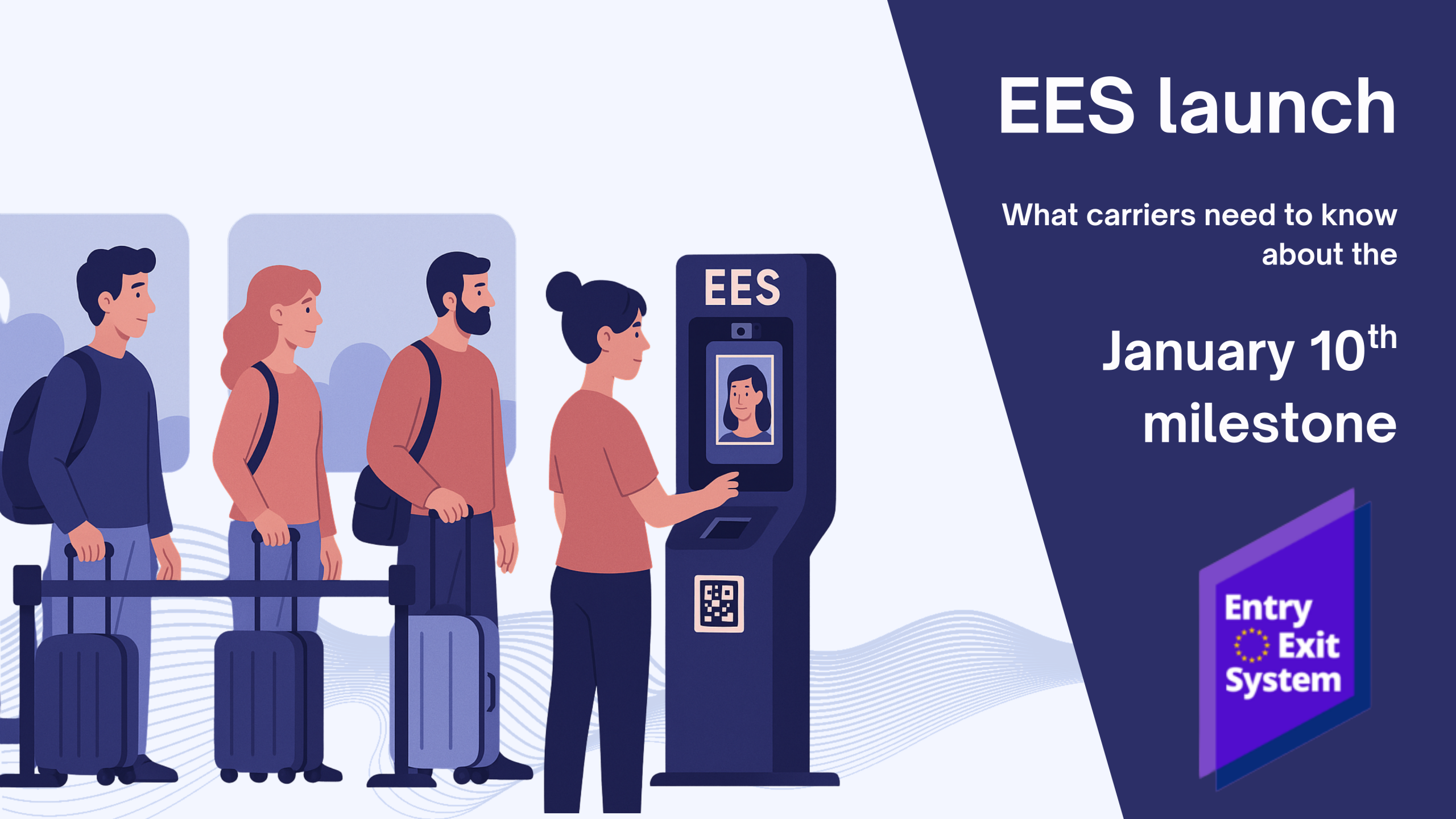
What happened on January 10th for Carriers
(including Charter, Business- and Private jets)?
Since January 10, 2026, the eu-LISA carrier interface is live. Operators can start querying the system to check visa validity of their passengers.
What are the passenger status returned by the EES?
 Positive status – OK to board Positive status – OK to board |
 Negative status – Complementary check required Negative status – Complementary check required |
|---|---|
| N/A
The nationality is not subject to EES checks (eg. EU citizens) OK-EES Valid single/double-entry visa found |
Not-OK-EES
No valid single/double entry visa found The carrier needs to check if the passenger has an other valid travel document to allow boarding.
|
 BUT if the visa has already been physically stamped, it might be a false-positive result. This situation is temporary
Still not that clear?
Contact us we will be happy to go in further details with you and provide you guidance.
Is a private flight subject to the obligations or should privately owned aircraft perform queries?
This is a recurrent question and the answer is often open to interpretation.To find the correct approach, you must first understand the objective of the obligation “why querying”.
The purpose of querying the Entry/Exit System (EES) is to prevent the transportation of passengers without valid immigration documents, which would result in a denial of entry at the border. Because visas are now digital and entries are digitally registered, querying the Carrier Interface is the only definitive way to verify validity. If a passenger is refused entry, the carrier is legally responsible for returning them to their point of departure.
What the regulation and official EES FAQ say:
“Any natural or legal person whose occupation is to provide passenger transport by air, sea or land (Article 1 of CISA) is considered a carrier and is obliged to verify travellers who are in scope of the carrier interface (Non-schengen Nationals subject to visa). However, natural or legal persons that use privately owned aircraft and do not transport passengers as their profession are not considered carriers and do not need to query the carrier interface.”
In simple terms, a private flight where the owner is flying for personal use fits the definition of “not transporting passengers as a profession.” In this scenario, a formal query is unnecessary. The aircraft owner assumes full personal responsibility for their own travel documents and those of their guests. Since the owner is not a commercial entity providing a service to the public, the burden of verification remains a private matter rather than a regulatory requirement.
Nevertheless, if operation of a private flight is outsourced to another entity, even not strictly identified as a “carrier” (such as OCC, trip support provider ) performing the query is highly recommended :
- Best Practice & Service: It ensures your passengers have valid visas, preventing stressful denials and complications at the border.
- Regulatory Safeguard: It protects the operating entity in the event that local authorities interpret the “Carrier” definition more broadly.
What is the COBST?
Since January 9th, the way to contact eu-LISA and get support has changed. All communication from Registration to Support should go through the official Carrier On-Boarding & Support Tool.
If not done yet, carriers should request their account on the euLISA web portal now.